Comparing Contractor Bids: Do Not Pick the Cheapest Before Reading This
- Ziad Eltaky
- 2 min read
- October 23, 2026
Three bids arrive for the same work with big gaps. The cheapest is tempting, but the difference may come from a missing scope or a forgotten item rather than efficiency. A proper comparison works in three layers: scope first, then price, then conditions.
Layer 1: Normalise the scope
Put all bids in one table with the same items. Look for:
- Missing items, or items marked “to be determined”.
- Exclusions in the conditions (excludes transport, temporary works, testing).
- Specifications or brands that differ from what was asked.
- Different quantities assumed by each contractor when the takeoff is theirs.
Add an estimated cost for the items a bid left out, so everyone stands on the same basis. This is called bid levelling.
Layer 2: Price
- Compare the levelled total and also the big items on their own.
- Unbalanced rates: an item that starts early is priced high to collect a large early payment, and a late item is priced low. Watch for it because it gives you unfair cash flow.
- A bid far below the average calls for a direct question about its basis. It may be an arithmetic error or an intention to claim extra later.
Layer 3: Conditions
- Duration and a realistic programme.
- Payment terms, advance payment and retention.
- Warranty period and performance bond.
- The contractor’s experience on similar projects, resources and workforce.
Weighted scoring
To avoid deciding by impression, set a weight for each criterion before opening the bids. For example: price 60%, quality and experience 25%, duration 10%, payment terms 5%. Then score each bid out of 10, multiply by the weight and add up. Fix the weights in advance so they are not influenced by the bid you prefer.
Document the decision
Keep the comparison table with the reasons for the choice. If someone objects later or a partner changes, the justification is ready.
The ready sheet
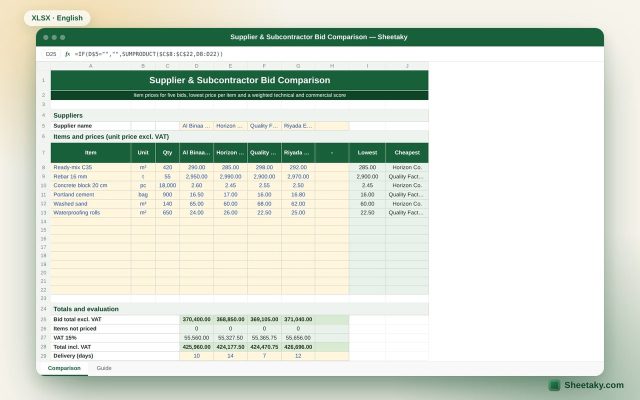
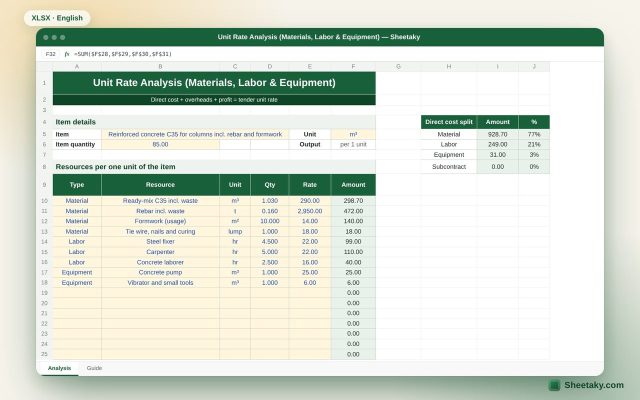
Put the bids in the contractor bid comparison sheet and it compares item against item and shows the lowest, the highest and the gap from the average. To sanity-check an item price, analyse it yourself with the unit rate analysis sheet.
Download the related sheets
Quantity takeoff & pricing
Supplier and Subcontractor Bid Comparison Excel Sheet with Weighted Scoring
An Excel bid tabulation: five suppliers side by side, the lowest price per item, totals with VAT, and…
Quantity takeoff & pricing
Unit Rate Analysis Excel Sheet for Construction Items: Materials, Labor, Equipment and Profit
An Excel sheet to build the unit rate of any BOQ item: resources per unit (materials, labor, equipment,…
Project management & contracting
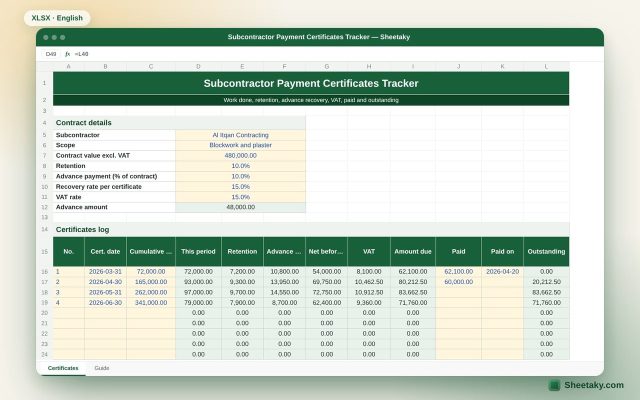
Subcontractor Payment Certificates Tracker in Excel: Retention, Advance and Payments
An Excel tracker for subcontractor certificates: this period from cumulative, retention, advance recovery, VAT, amount due, paid and…
Get every new sheet and guide
A short, useful email when a new sheet or guide is added. Unsubscribe any time.